


Why the First “Better” Night Can Be Misleading for Parents
The fever breaks.
Your child starts eating again.
Their energy finally returns.
And after days of interrupted sleep, you think:
“Finally, we're through the worst of it.”
But bedtime comes, and the coughing starts again.
This is something many parents experience after a respiratory illness. Even when the fever and other symptoms have improved, a cough can linger as the airways recover.
nhs.uk+1
And when that cough keeps interrupting your child's sleep, it's natural to wonder whether they're actually getting better.
The important thing is understanding why the coughing continues — and when it needs medical attention.

Why the First 24 Hours After a Child Starts “Feeling Better” Matter More Than Most Parents Realise
The day after the worst symptoms ease is often when parents finally exhale.
The fever is down.
Their child seems calmer.
The appetite starts coming back.
And naturally, most parents assume the hardest part is over.
But this is often the stage where the airways are still recovering quietly in the background.
During those first 24 hours after the worst of a respiratory illness:
- the airways can still be dry and irritated
- leftover mucus can still keep the chest and throat unsettled
- nighttime coughing can still flare up even when the child seemed fine during the day
That’s why so many parents get confused.
Because their child doesn’t look “really sick” anymore…
but nights still don’t feel normal.
And when that lingering irritation isn’t understood early, it can keep showing up as:
- bedtime coughing
- restless sleep
- repeated nighttime wakeups
- that feeling that recovery is dragging on longer than expected
Parents often say:
“They’re better… but they’re still not quite right.”
That’s because recovery doesn’t always end when the fever does.
Sometimes the most uncomfortable part is what lingers after.
This Is the Moment Parents Either Support Recovery Immediately or Miss it
Here’s what most parents don’t realise:
Once that first recovery phase passes, the body doesn’t simply reset and start fresh the next night.
If dryness and irritation are still lingering, they tend to keep showing up the same way:
nighttime coughing
sleep disruption
and that feeling that recovery is dragging on
Not alarming — just persistent.
And that’s how a short recovery window quietly stretches into days of lingering discomfort.
By the time most parents step in, they’re no longer supporting early recovery.
They’re trying to undo what was left lingering.

Why Parents Who Act Early See a Dffeirence
Parents who take action during their child's recovery don't wait for another difficult night to understand what their child needs.
They recognise when lingering symptoms need medical attention and prepare for prescribed respiratory treatment before it's urgently needed.
That early preparation:
- helps them understand their child's respiratory needs
- avoids last-minute searches for medical equipment
- ensures they're familiar with the right device if treatment is prescribed
This isn't about rushing recovery. It's about having the right care and equipment ready when your child needs them.
The Simple Recovery Step Parents Take During This Window
Parents who don’t want to overreact but also don’t want to miss the recovery window add one short step.
Just 5 quiet minutes before bed.
Their child breathes normally while a fine saline mist gently hydrates the airways that were dried out during sickness.
No medication, No forcing, No guessing.
It’s not about doing more it’s about supporting recovery at the exact moment the body is resetting.
Why This 5-Minute System Completes Recovery
This system works because it supports breathing directly, not passively.
Saline closely matches the body’s natural balance, which is why it’s commonly used for airway hydration during recovery.
Delivered as a fine mist through calm breathing, it helps soothe lingering dryness and allows comfort to return naturally.
For many parents, this is the step that makes recovery feel finished, not dragged out.
Pocket one of these, it will come in handy.


Nebumed® Portable Nebulizer (5-Minute Recovery System)
Nebumed® Portable Nebulizer (5-Minute Recovery System)
 Trusted Service. Reliable Delivery.
Secure checkout, tracked shipping & dedicated support.
 Delivers relief directly to the airways — where flu congestion hits hardest
Used during the most sensitive recovery window
Used during the worst flu symptoms — when breathing feels impossible
A safe, medication-free solution parents can use immediately at home
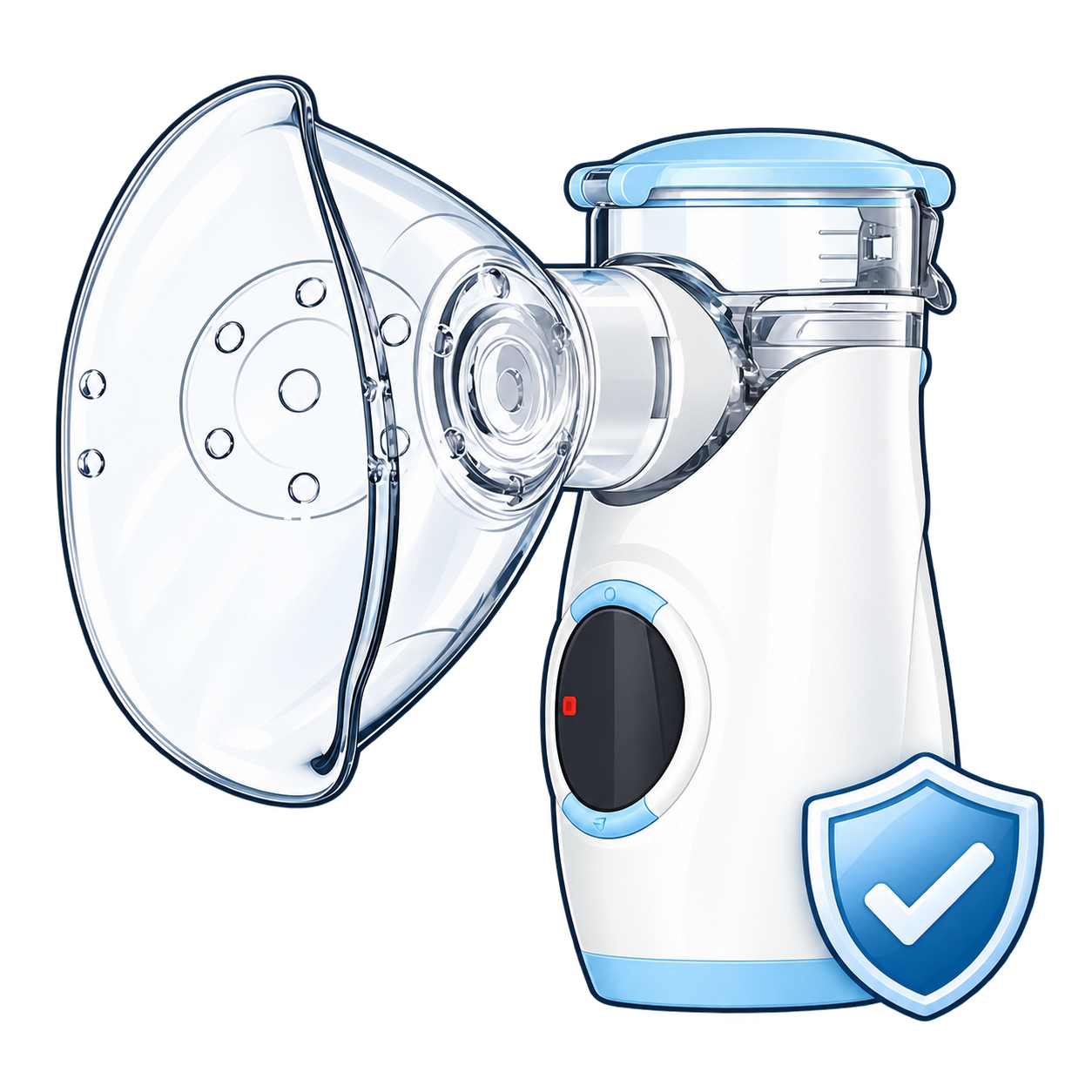 Trusted, High-Quality Nebulizer
 Works with Any Liquid
 Safety-Tested Certificate
Couldn't load pickup availability
100% Satisfaction Guarantee
We are confident you'll love our products. If not, enjoy a full 90-day money-back guarantee.
"After my kids caught the flu for the second time, I knew I had to be prepared. Having this at home has made cough and flu nights so much easier. No more last-minute scrambling. I honestly think every parent should have one at home!”
Medications Compatible with Our Portable Nebulizer
Medications Compatible with Our Portable Nebulizer
The following medications are listed in your reference:
- Albuterol (Salbutamol)
- Levalbuterol (Xopenex)
- Ipratropium Bromide (Atrovent)
- Albuterol + Ipratropium (DuoNeb)
- Budesonide (Pulmicort Respules)
- Fluticasone (nebulized form, where prescribed)
- Sterile Saline (0.9%)
- Hypertonic Saline (3% or 7%)
- Acetylcysteine (Mucomyst)
- Cromolyn Sodium
- Tobramycin (where prescribed)
- Gentamicin (where prescribed)
Is this safe for kids to use regularly?
Is this safe for kids to use regularly?
Yes. This system is designed for gentle, regular use and uses sterile, non-medicated saline only. There are no drugs, fragrances, or additives.
It’s meant to support everyday indoor comfort, not treat medical conditions.
If your child has a diagnosed respiratory condition or you have specific concerns, it’s always best to check with your healthcare professional first.
Will my child actually tolerate using this?
Will my child actually tolerate using this?
Most kids do very well with it.
Sessions are short, gentle, and quiet. Many parents build it into calm moments like bedtime stories, screen time, or winding down. It doesn’t involve force, discomfort, or strong sensations.
If a child needs time to get used to it, that’s normal — consistency helps.
How long does each session take?
How long does each session take?
Most sessions take about 5–10 minutes.
It’s designed to be quick and easy so it doesn’t feel like another big task in your day.
How often do we need to use it?
How often do we need to use it?
Many families use it once daily as part of their indoor routine.
Some use it a bit more or less depending on their environment and comfort needs.
There’s no strict schedule — consistency matters more than perfection.
Is this a medical treatment or medication?
Is this a medical treatment or medication?
No.
This is a comfort-focused, non-medicated system designed for everyday indoor use.
It is not intended to diagnose, treat, cure, or prevent any disease.
How soon might we notice a difference?
How soon might we notice a difference?
Some parents notice signs of improved comfort within the first couple of weeks of consistent use.
Others notice more subtle changes over time.
Every child and home environment is different — this is about supporting comfort, not instant fixes.
What if my child has allergies or sensitivities?
What if my child has allergies or sensitivities?
The hydration pods contain only sterile saline, which is generally very well tolerated.
If irritation occurs, discontinue use and consult a healthcare professional. Parents of children with known sensitivities often appreciate how simple and minimal the formula is.
Can siblings share the same device?
Can siblings share the same device?
Yes, with proper hygiene.
Each child should have their own mouthpiece or mask, which helps keep usage clean and comfortable.
What ages is this suitable for?
What ages is this suitable for?
There is no specific minimum age.
This system is designed for children of different ages, as long as it’s used under parent or caregiver supervision and according to the instructions provided. Usage is based more on comfort, tolerance, and supervision than age alone.


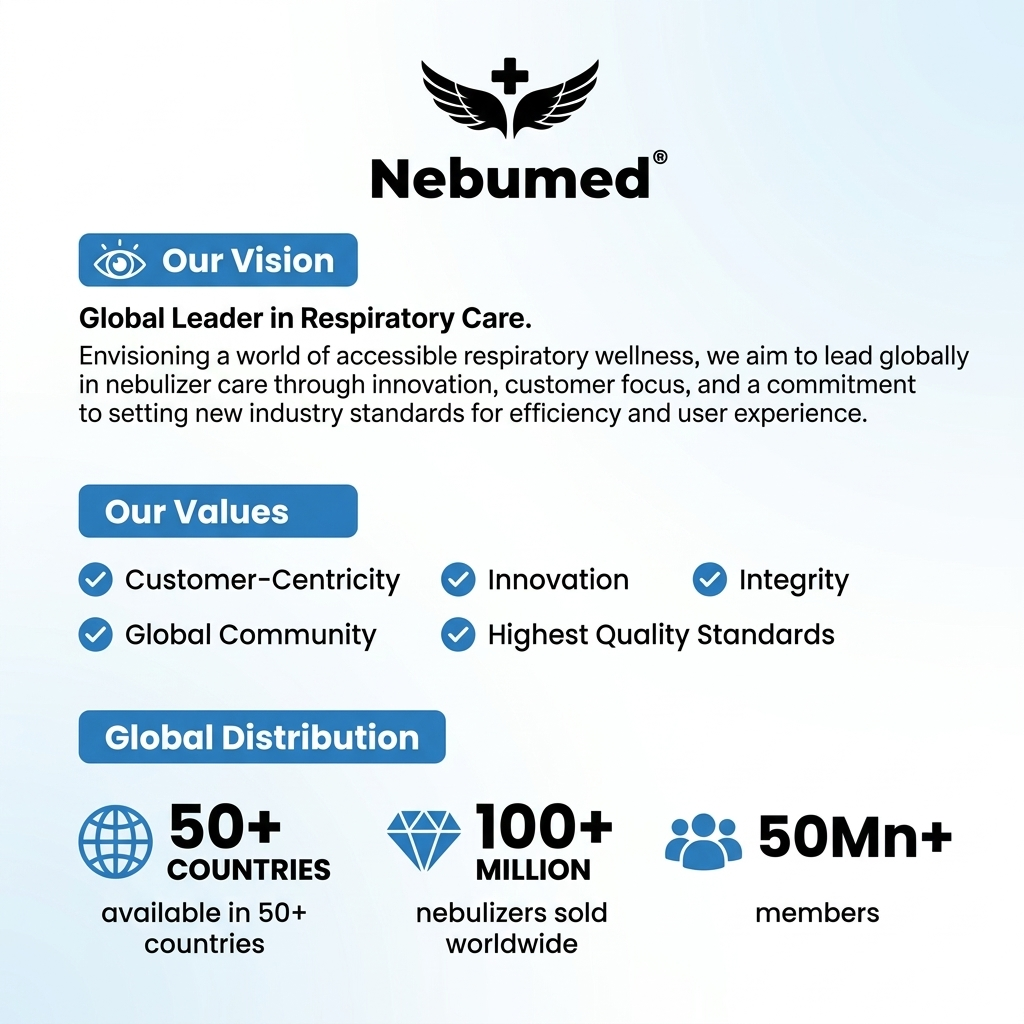


Using Water
Plain tap or bottled water should not be used in your nebulizer. Although it's suitable for drinking, it isn't sterile and may introduce harmful microorganisms directly into the airways.
Even distilled water isn't a substitute for sterile saline. Always use fluids specifically approved for nebulization and follow your healthcare provider's instructions.
Using Sterile Saline
Sterile 0.9% saline contains the same salt concentration as the body's natural fluids, making it suitable for nebulization when recommended by your healthcare provider.
When inhaled as a fine mist, saline can help moisten the airways and loosen thick mucus, making secretions easier to clear.
Convenient, pre-measured single-use saline ampoules help ensure consistent preparation and proper hygiene during treatment. Use only sterile saline intended for nebulization, in the amount advised by your healthcare provider.
Using Prescribed Medication
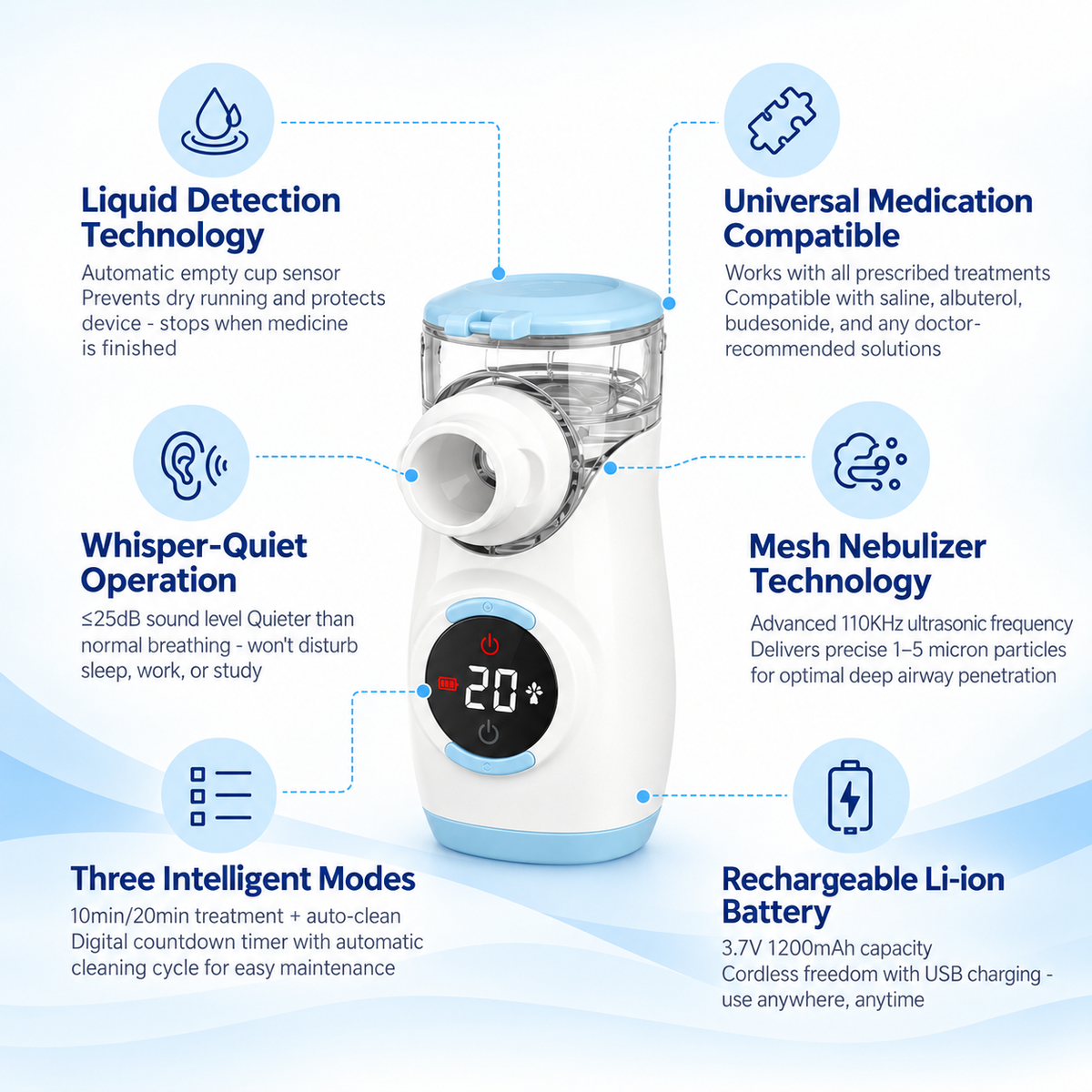
Nebumed can also be used to administer compatible prescription medications when recommended by your healthcare provider.
A nebulizer converts liquid medication into a fine mist that can be inhaled through a mask or mouthpiece, delivering treatment directly into the airways. Depending on the medication prescribed, this can help manage symptoms such as wheezing, airway inflammation and breathing difficulties.
For families with children who require nebulized medication, having a portable device at home means treatment equipment is readily available when needed.
Always follow your doctor's prescribed dosage and treatment schedule. Not all medications are suitable for mesh nebulizers, so confirm compatibility before use. Children should use prescribed nebulized medication under appropriate medical supervision.
nhs.uk+1
Common Questions About Using This During Flu Recovery
Be Prepared Before the Next Sick Night
You never know when your child might need respiratory treatment.
Having Nebumed ready at home means one less thing to worry about when they're sick.